
Case study - Simon Corkill - North Waikato - Stampede CM142
New perennial beefs up tough, busy drystock business
Five years of hard slog have turned a challenging North Waikato farm into a highly productive beef breeding and finishing unit that leverages good cool season growth while sidestepping the risk of frequent hot dry summers.
Now the big development phase is all but finished, the focus has shifted to optimising pasture yield and utilisation, with one new perennial ryegrass in particular looking very promising.
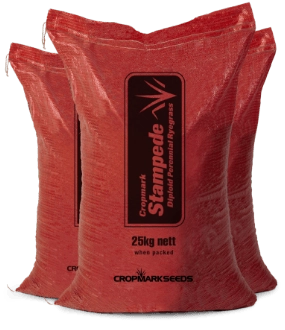
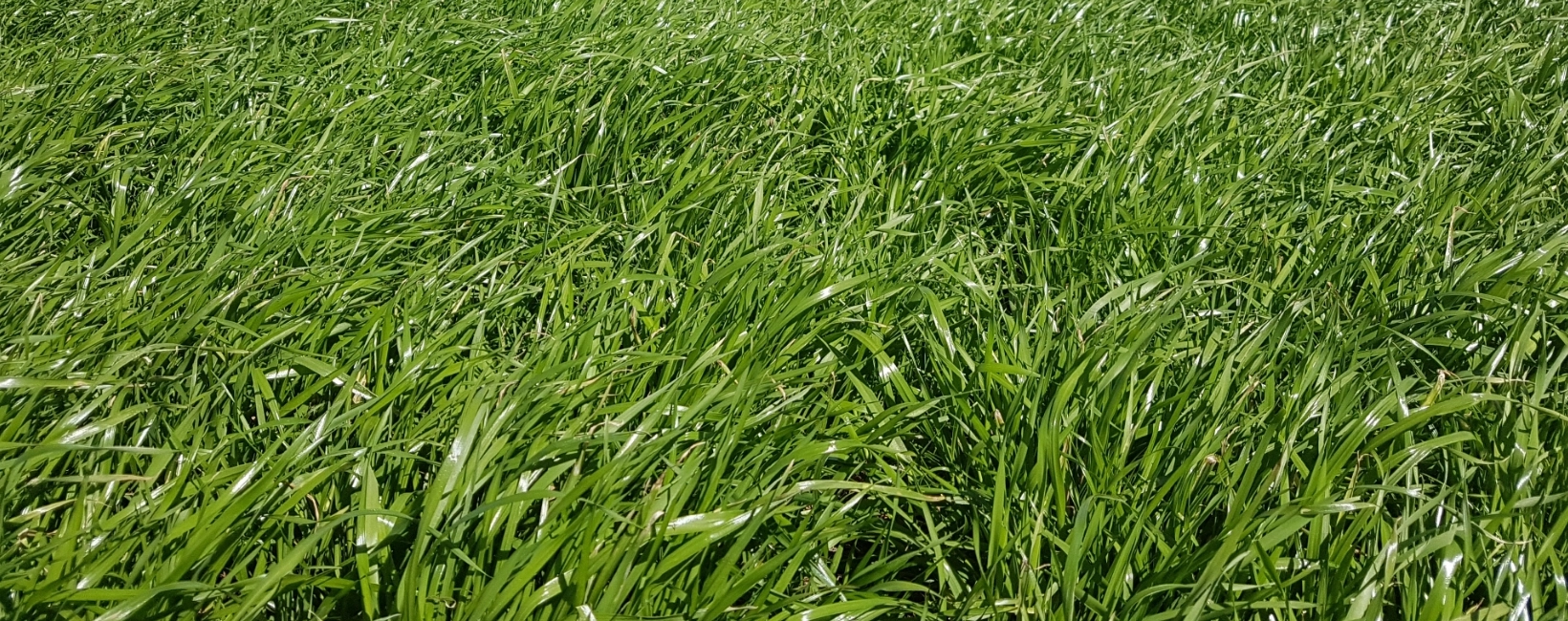
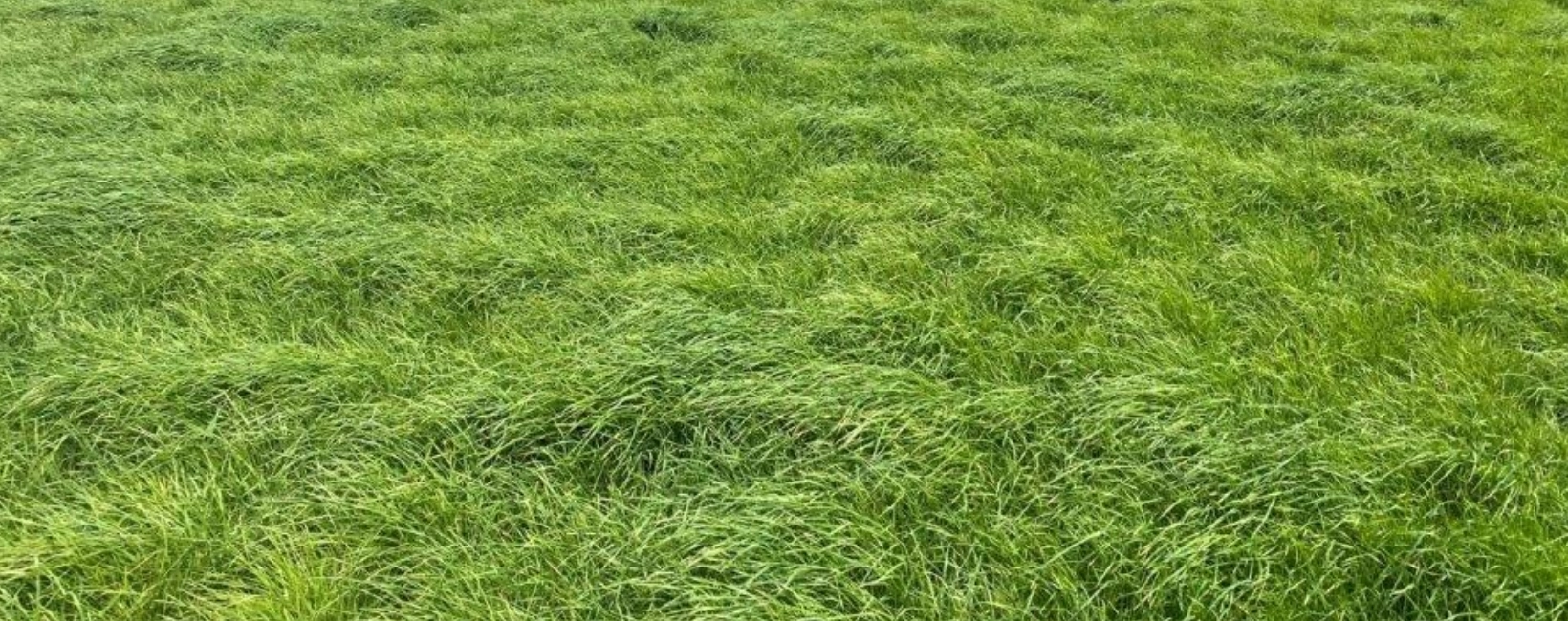
Stampede with CM142 endophyte was bred for yield and animal health.
Two years after sowing his first paddock, which not only out-grew other new grass sown at the same time, but came through the punishing 2024 drought ‘good as gold’, Simon Corkill says it’s his new favourite
Simon’s no fan of sheep and doesn’t much like bulls either.
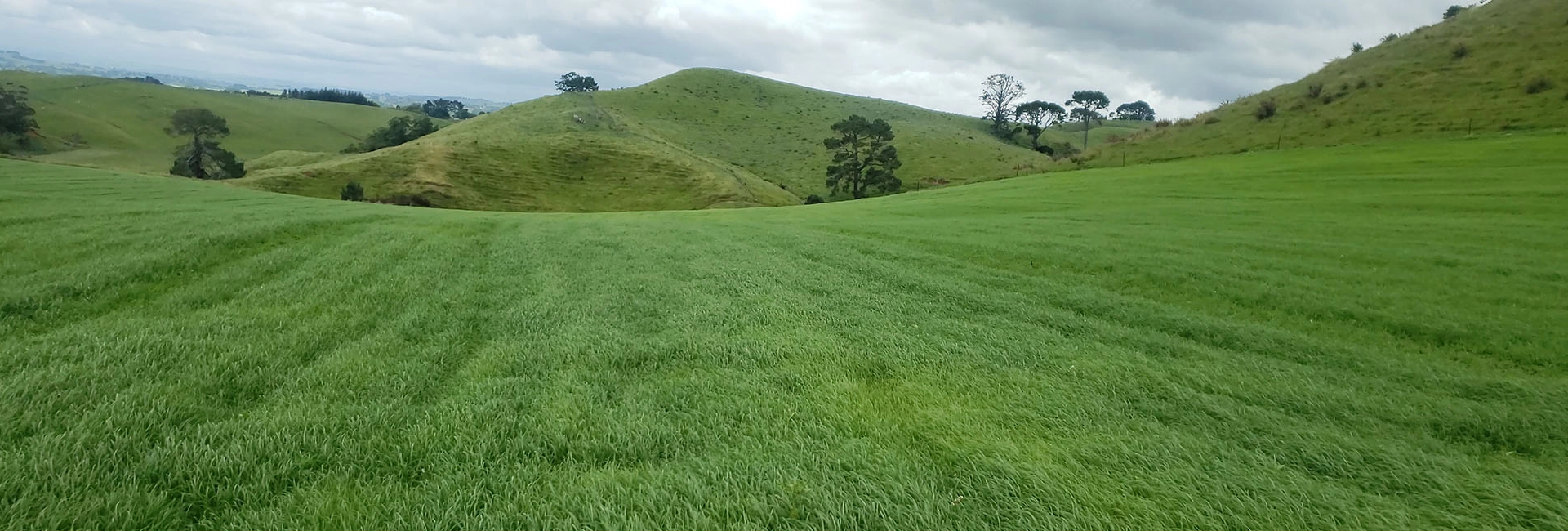
So when he took over the 300 ha drystock block west of Huntly in 2020, he set about creating a busy, intensive grass based system that avoids both, but still turns off plenty of liveweight per ha despite highly variable contour.
Key steps were increasing the number of paddocks from seven to 107, and renewing up to 30ha of pasture a year via summer crop on the land that can be worked with a tractor.
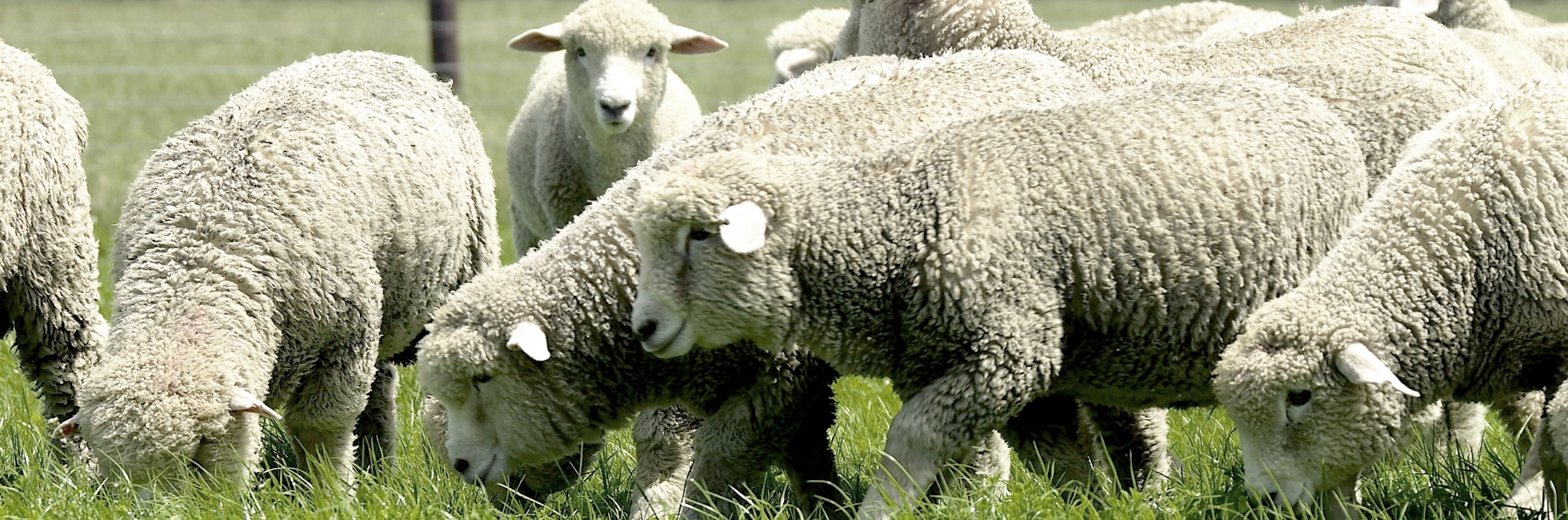
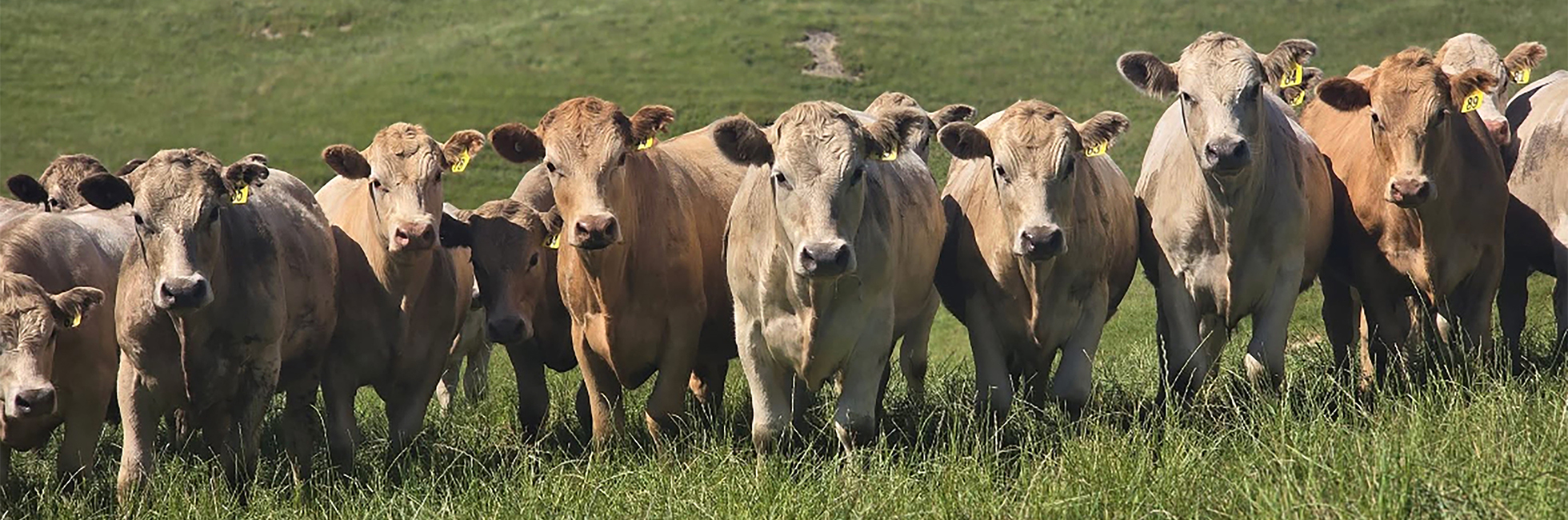
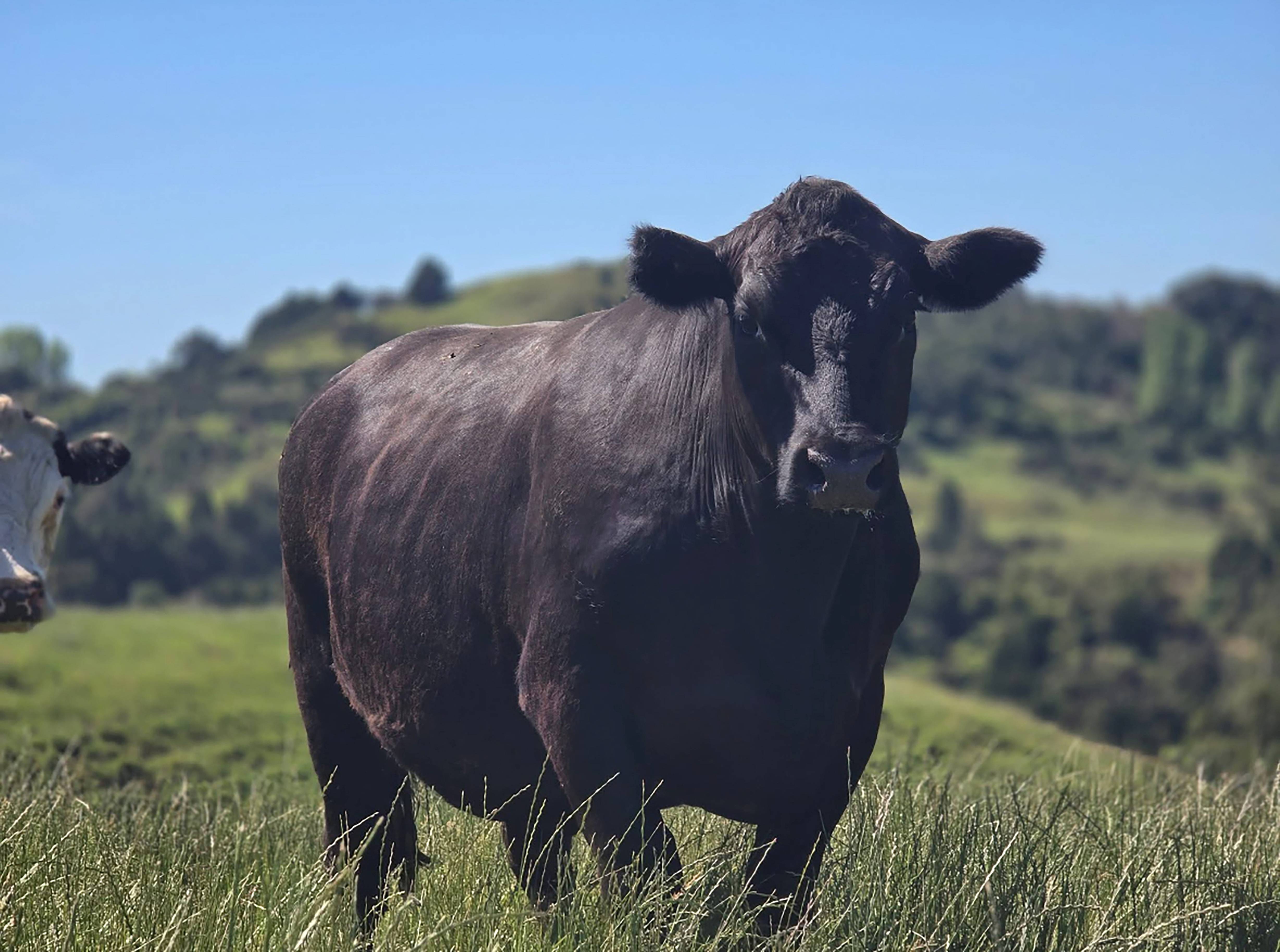
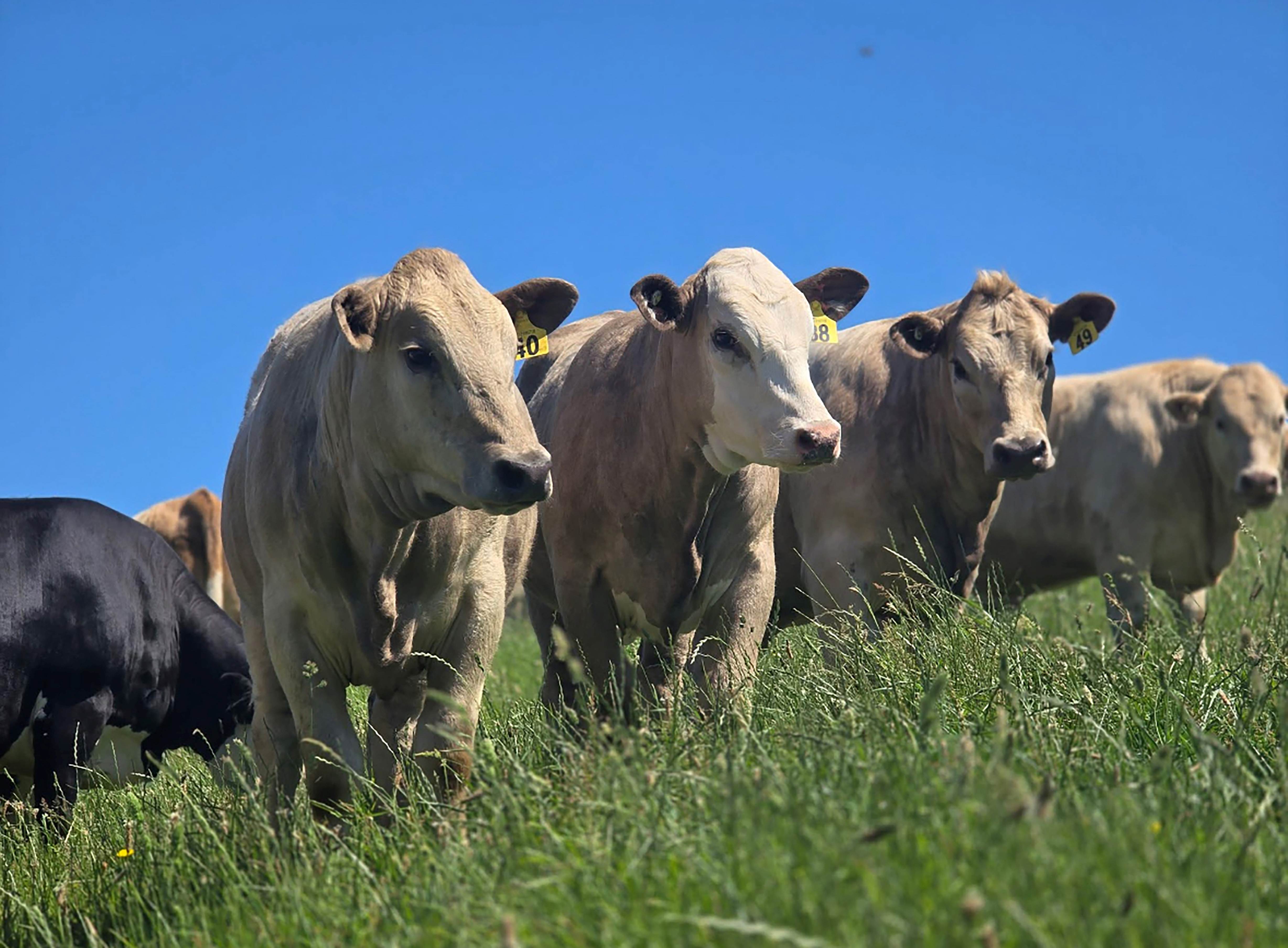
From 1 March to the first week of January, the property is fully stocked with 600 cattle. This past year the mix included 130 autumn calving breeding cows, 200 R2 Angus steers, 200 R1 Charolais steers, and 70-odd autumn calves.
Every year Simon rears 800 calves as well, growing them out to sell at 100 kg.
Destocking in January and February helps dodge the worst of what can be ‘horrific dry, windy summers’ before the cycle starts again in March.
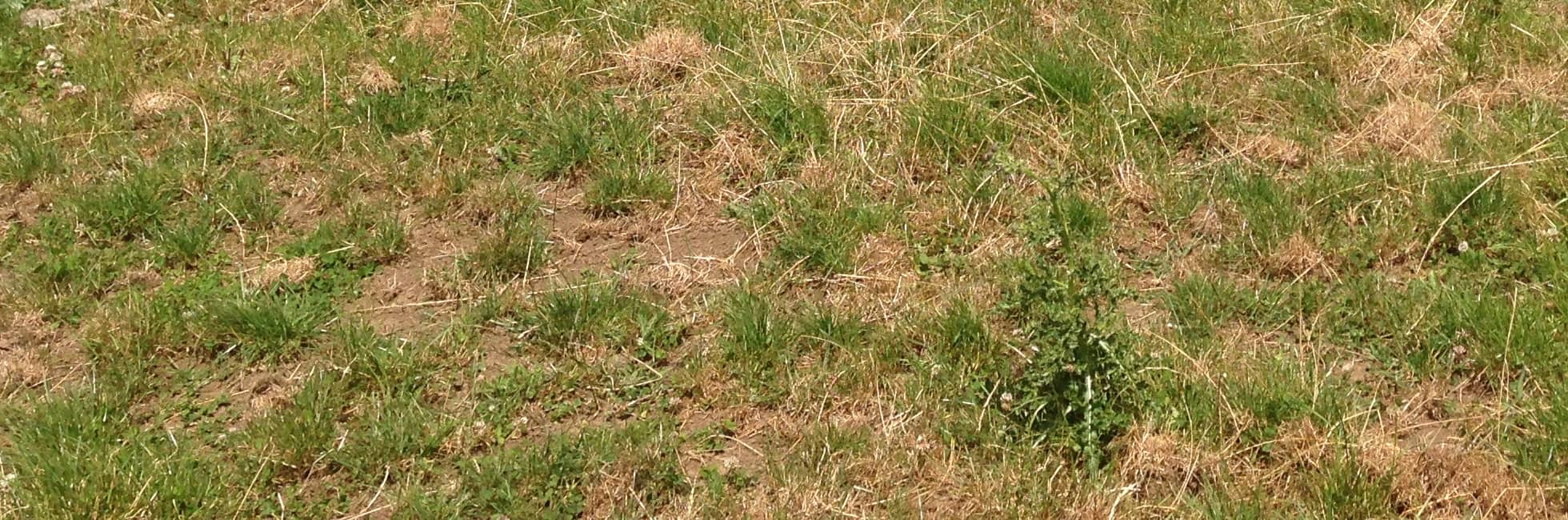
Simon initially sowed Stampede ex summer crop in autumn 2024 because his first choice cultivar was not available, and says he has no regrets.
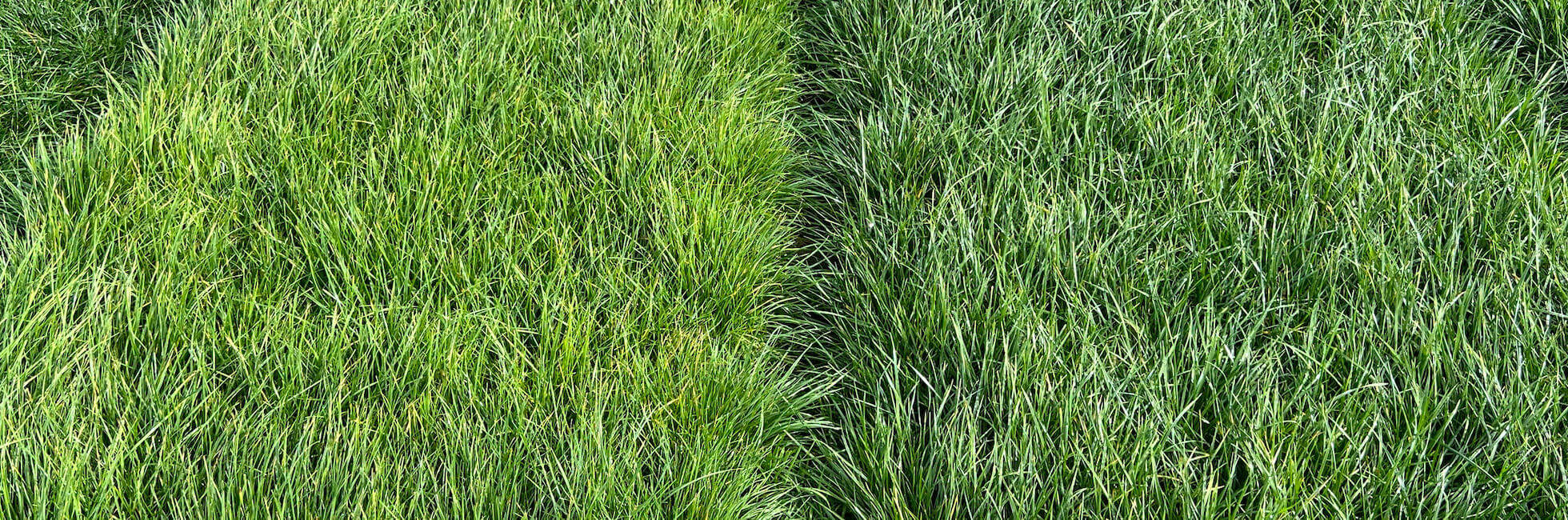
“I did one paddock as a trial, next to other new grass paddocks, and it wasn’t long before I got an extra grazing out of it. It was also the only new grass paddock that season that got cut for silage, which is almost another extra grazing.”
Just as important, that first Stampede paddock coped with ‘the worst summer ever’ in 2024/25, and recovered well after rain finally arrived.
“My breeding cows live on that part of the farm, so it gets grazed hard at times.”
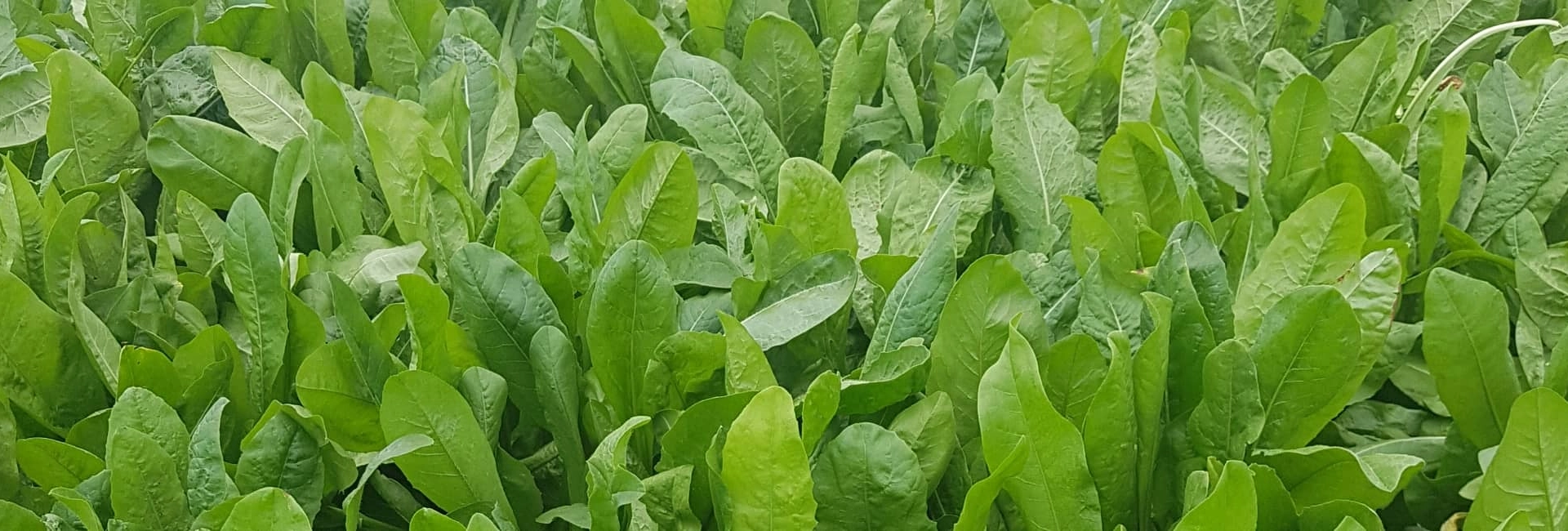
Since then he’s oversown Stampede into paddocks of struggling Italian and added another 20 ha of Stampede mixed with Matrix after summer chicory in autumn 2025.
“Something else I’ve noticed, those paddocks always look like you’ve mowed them after grazing – they’re very evenly grazed.
“I break fence and back fence everything, and in some paddocks it’s hard to get the post grazing residuals I want, but with the Stampede/Matrix mix the animals seem full and happy.”
More Stampede is on the renewal plan for autumn 2026, but this season, Simon’s doing things a bit differently, changing his summer cropping to try and break a persistent weed challenge.
Instead of chicory, he sowed 13 ha of a fast growing annual C4 grass called Japanese millet in November.
About half this will be replaced with annual ryegrass in autumn 2026, and the other half with new Stampede.
“The plan is to rotate the Japanese millet and the annual on the same paddocks for three years and get rid of all the weeds.”
A new perennial ryegrass from Cropmark Seeds, Stampede is growthy, dense, and late heading with reliable yield in winter and early spring. CM142 is Cropmark’s own novel endophyte, providing robust insect protection and excellent ryegrass staggers resistance.
Featured Products